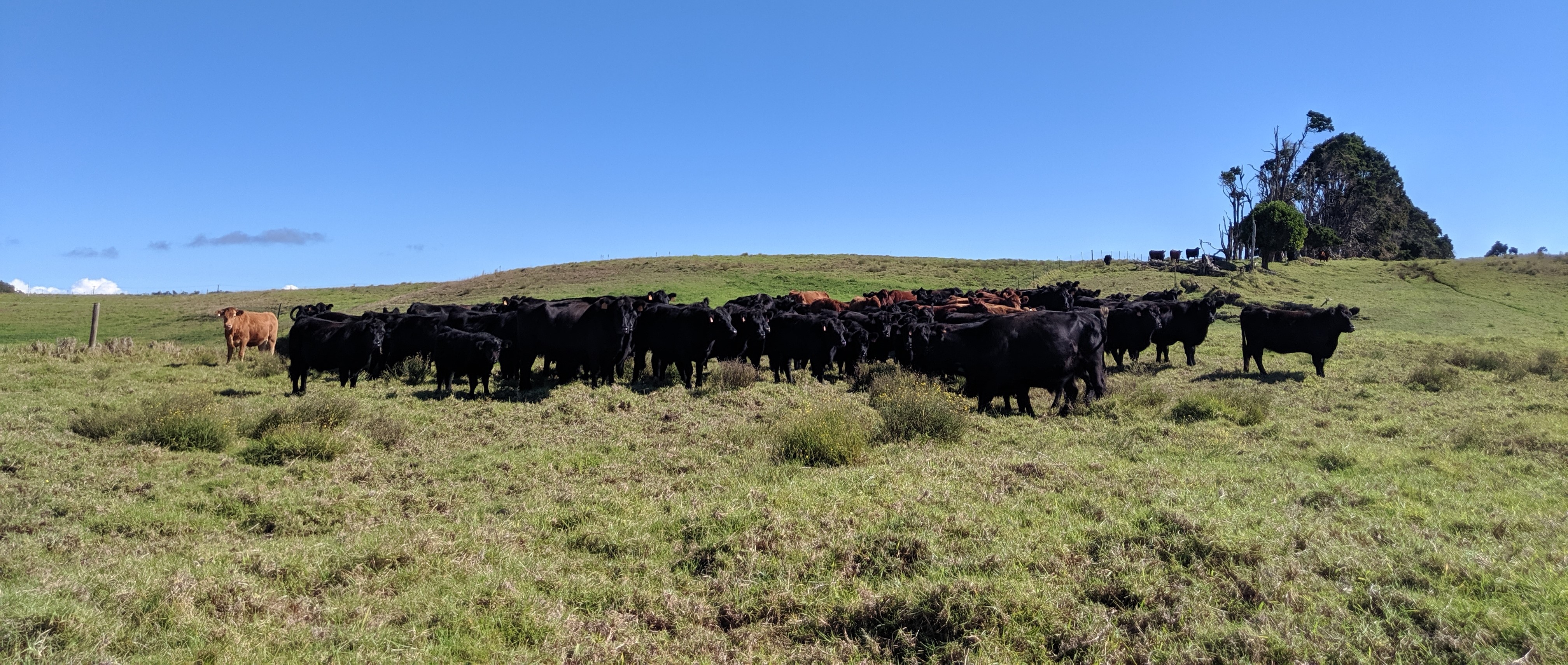
Most Hawaiʻi ranches operate as cow-calf operations, where calves are born and raised on pasture for their first 12–16 months. Because Hawaiʻi has limited finishing and processing capacity, many calves are sold and shipped to mainland states such as California for the next stage of production. Shipping cattle provides ranchers access to larger markets and processing facilities while helping keep Hawaiʻi ranches economically viable.
Hawaiʻi has relatively few slaughter and meat processing facilities compared to the mainland. While local processors serve an important role in supplying Hawaiʻi-grown beef, existing capacity cannot process every animal raised in the islands. As a result, many ranchers sell cattle to mainland buyers for finishing and processing.
Yes. Family ranches remain the foundation of Hawaiʻi’s cattle industry, continuing a ranching tradition that dates back more than 200 years. Nationally, about 95% of beef cattle farms and ranches are family-owned.
Producing beef in Hawaiʻi comes with unique challenges. Ranchers often face higher transportation, labor, feed, fuel, and regulatory costs than producers on the mainland. Limited processing capacity and fewer buyers also affect pricing. Despite these challenges, many consumers choose local beef because they value supporting Hawaiʻi agriculture and local ranching families.
Hawaiʻi's diverse landscapes and mild climate allow cattle to graze on pasture throughout much of the year. These conditions support year-round forage production and make pasture-based ranching a defining characteristic of Hawaiʻi's beef industry. Ranches across the islands raise cattle in environments ranging from dry grasslands to higher-elevation pastures, reflecting the diversity of Hawaiʻi's natural resources.